

Introduction
Reinventing yourself means intentionally changing your habits, mindset, identity, and daily behaviors to align with a new version of who you want to become. A structured reinvent yourself checklist helps turn vague motivation into clear, repeatable actions.
Instead of relying on sudden inspiration, reinvention works through small, consistent changes that reshape your thinking patterns and routines over time. This process is rooted in behavioral psychology—where repeated actions gradually influence identity and long-term outcomes.
Quick Summary
- Reinventing yourself is a process of identity and behavior change, not a one-time decision
- A checklist provides clarity, structure, and accountability
- Lasting change happens through consistent habits, not motivation alone
- Focus on small daily actions that align with your desired future self
What Does It Mean to Reinvent Yourself?
Reinventing yourself means deliberately changing your behavior patterns and identity to match your desired future version.
In practical terms, reinvention involves:
- Changing your habits and routines
- Shifting your mindset and beliefs
- Redefining your identity and priorities
The key difference lies between surface-level change and identity-level change:
| Surface Change | Identity-Level Change |
|---|---|
| Temporary actions | Long-term behavior shift |
| Goal-focused | Identity-focused |
| Inconsistent | Self-reinforcing |
Reinvention is a form of self-directed personal growth. It is not about becoming someone else—it’s about becoming more intentional with your actions and decisions.
Why People Feel the Need to Reinvent Their Life
People feel the need to reinvent their life when there is a mismatch between their daily actions and their internal values.
Common triggers include:
- Feeling stuck or directionless
- Burnout from repetitive routines
- Life transitions (career, age, environment)
- Lack of fulfillment or purpose
From a behavioral psychology perspective:
Discomfort → Awareness → Desire for Change
When your daily habits don’t reflect your goals or identity, dissatisfaction increases. This creates psychological tension, which drives the need for reinvention.
Reinvent Yourself Checklist (Step-by-Step Framework)
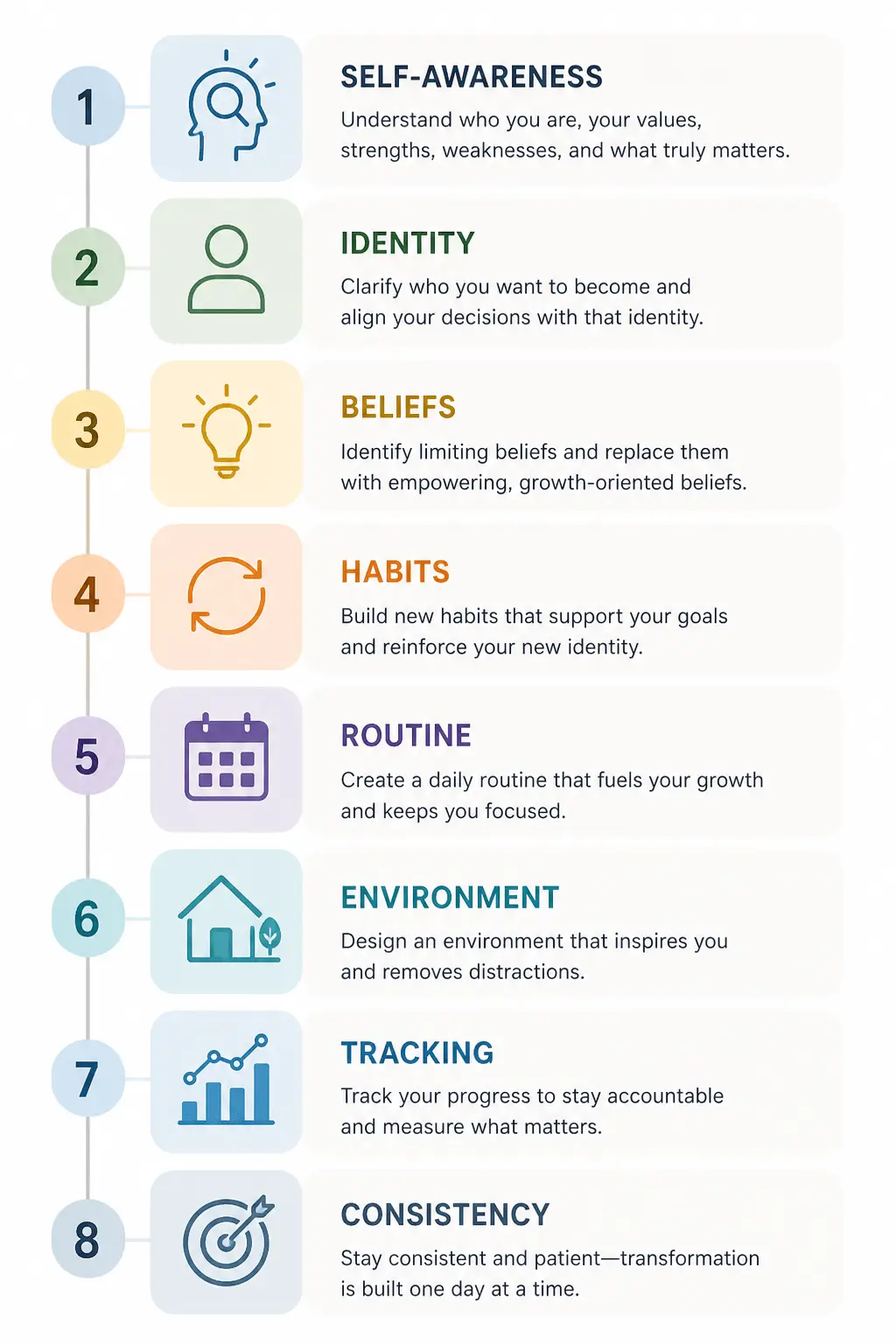
This step-by-step framework answers how to reinvent yourself through structured, actionable changes.
1. Define Your Current Reality
- Identify your habits, routines, and thought patterns
- Ask: What is working vs what is draining me?
2. Clarify the Version You Want to Become
- Focus on identity, not just outcomes
- Example: “I want to be disciplined” instead of “I want to wake up early”
3. Identify Limiting Beliefs
- Recognize negative self-talk patterns
- Replace “I can’t” with evidence-based thinking
4. Design New Daily Habits
- Start with small, repeatable actions
- Use habit stacking to attach new behaviors to existing routines
5. Build a Simple Routine System
- Create morning and evening anchors
- Reduce decision fatigue through structure
6. Remove Friction and Distractions
- Optimize your environment (phone use, workspace, triggers)
7. Track Progress and Adjust Weekly
- Reflection builds awareness and consistency
- Use simple tracking methods
8. Commit to Consistency Over Intensity
- Sustainable effort leads to long-term results
- Avoid short bursts of extreme motivation
Motivation vs Discipline: What Actually Drives Reinvention
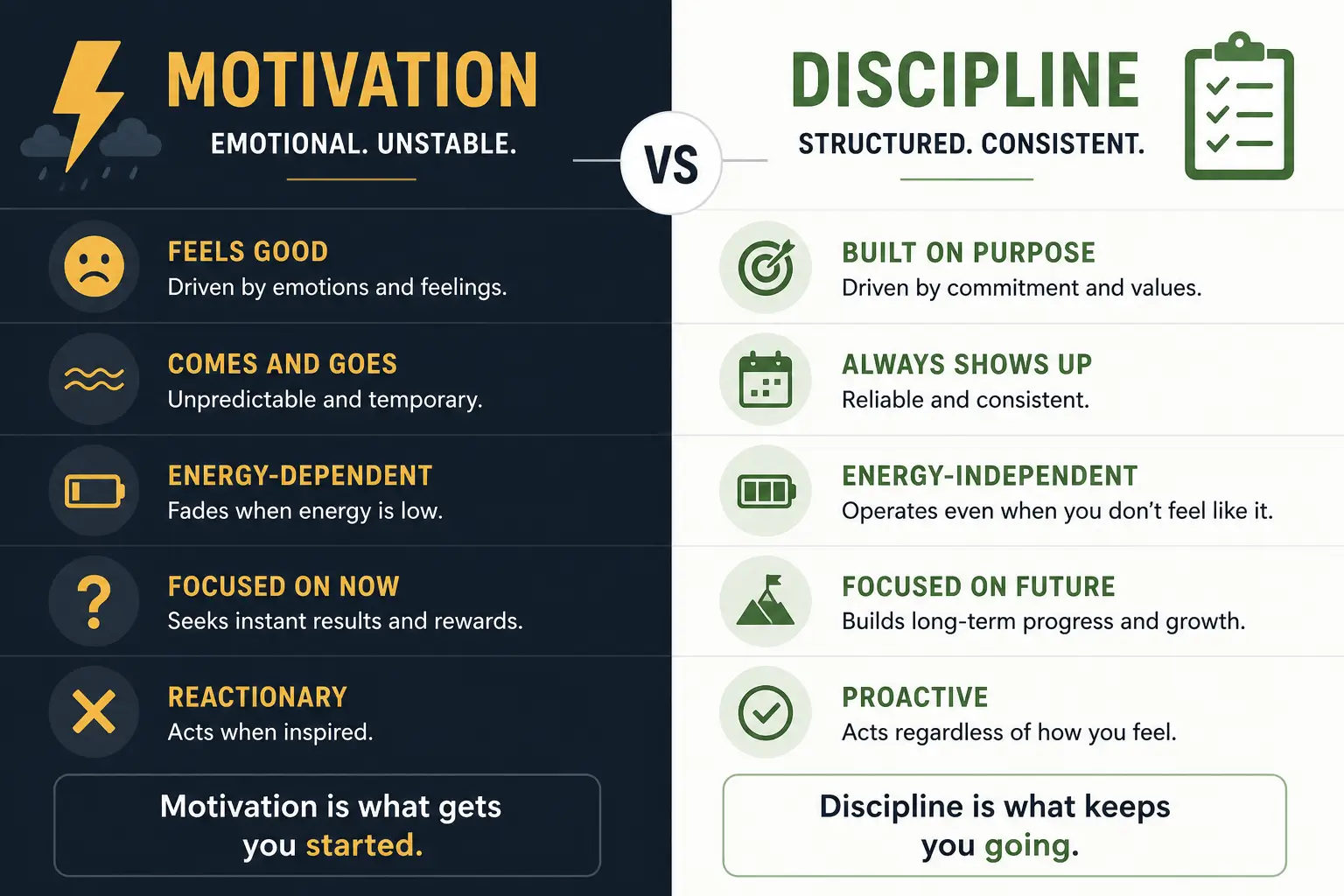
Reinvention is driven by discipline, not motivation, because discipline creates consistent action regardless of emotional state.
| Motivation | Discipline |
|---|---|
| Emotion-based | System-based |
| Temporary | Reliable |
| Starts action | Sustains action |
| Unpredictable | Structured |
Key Insight:
Reinvention becomes sustainable when you rely on systems instead of waiting to feel motivated.
How Long Does It Take to Reinvent Yourself?
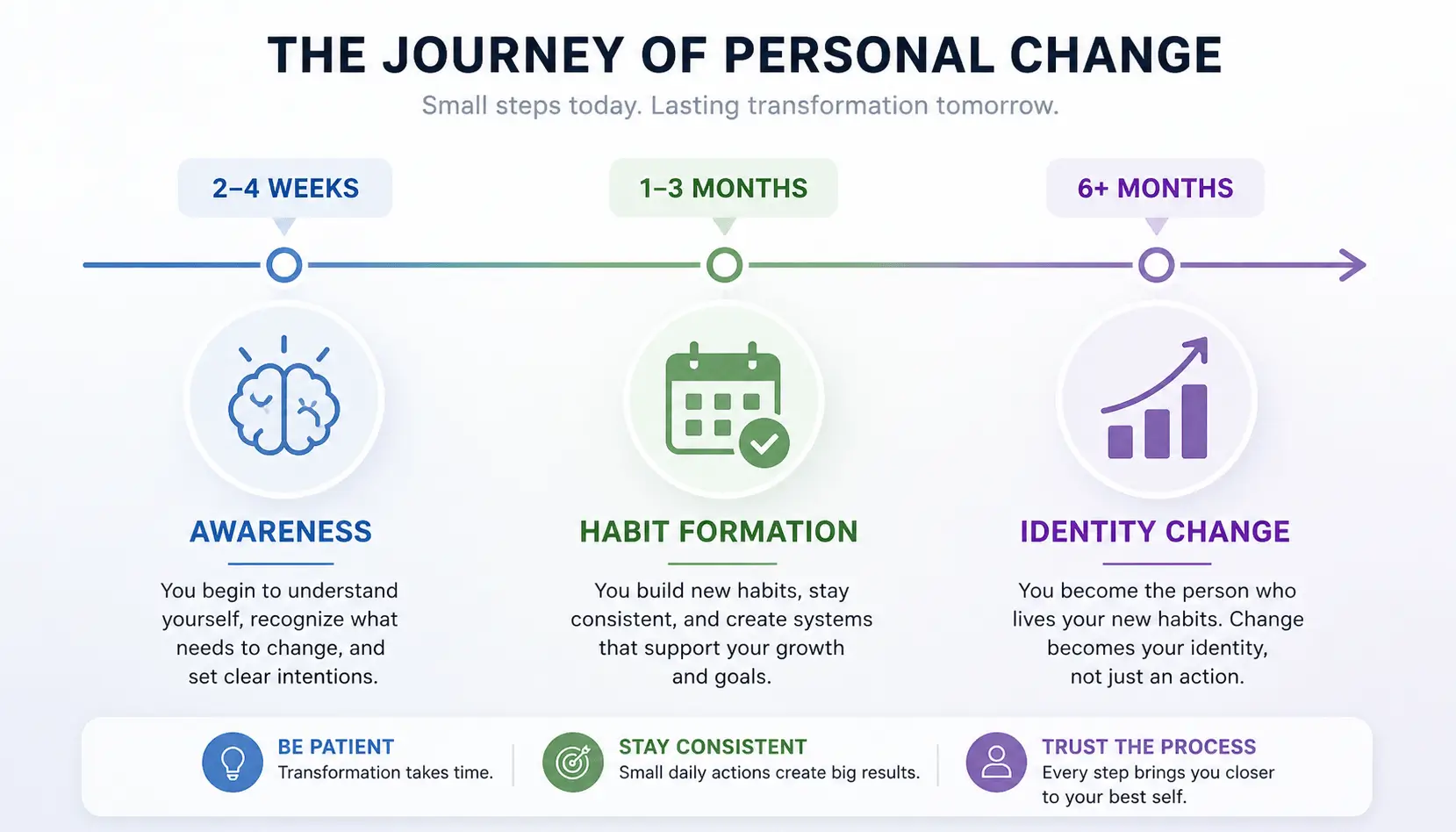
Reinventing yourself takes time because behavior and identity change gradually through repetition.
Timeline depends on:
- Habit complexity
- Consistency level
- Emotional resistance
General guideline:
- 2–4 weeks: Awareness and initial change
- 1–3 months: Habit stabilization
- 6+ months: Identity-level transformation
Key Principle:
Change feels slow in the beginning, but results compound over time.
Ways to Reinvent Yourself in Different Areas of Life
Reinvention applies across multiple life domains.
Personal Life
- Improve routines, health habits, and mindset
- Build consistency in daily behaviors
Professional Life
- Learn new skills
- Redefine career direction
- Focus on long-term growth systems
Social Identity
- Surround yourself with growth-oriented people
- Adjust environments that influence behavior
Mental & Behavioral Barriers to Reinvention
The biggest barriers to reinvention are psychological, not practical.
Common barriers:
- Fear of failure
- Overthinking
- Perfectionism
- Comfort zone attachment
Why they happen:
The brain prefers familiarity and predictability. Change introduces uncertainty, which triggers resistance.
How to overcome:
- Take imperfect action
- Focus on progress, not perfection
- Reduce decision complexity
Why People Fail to Stay Consistent (And How to Fix It)
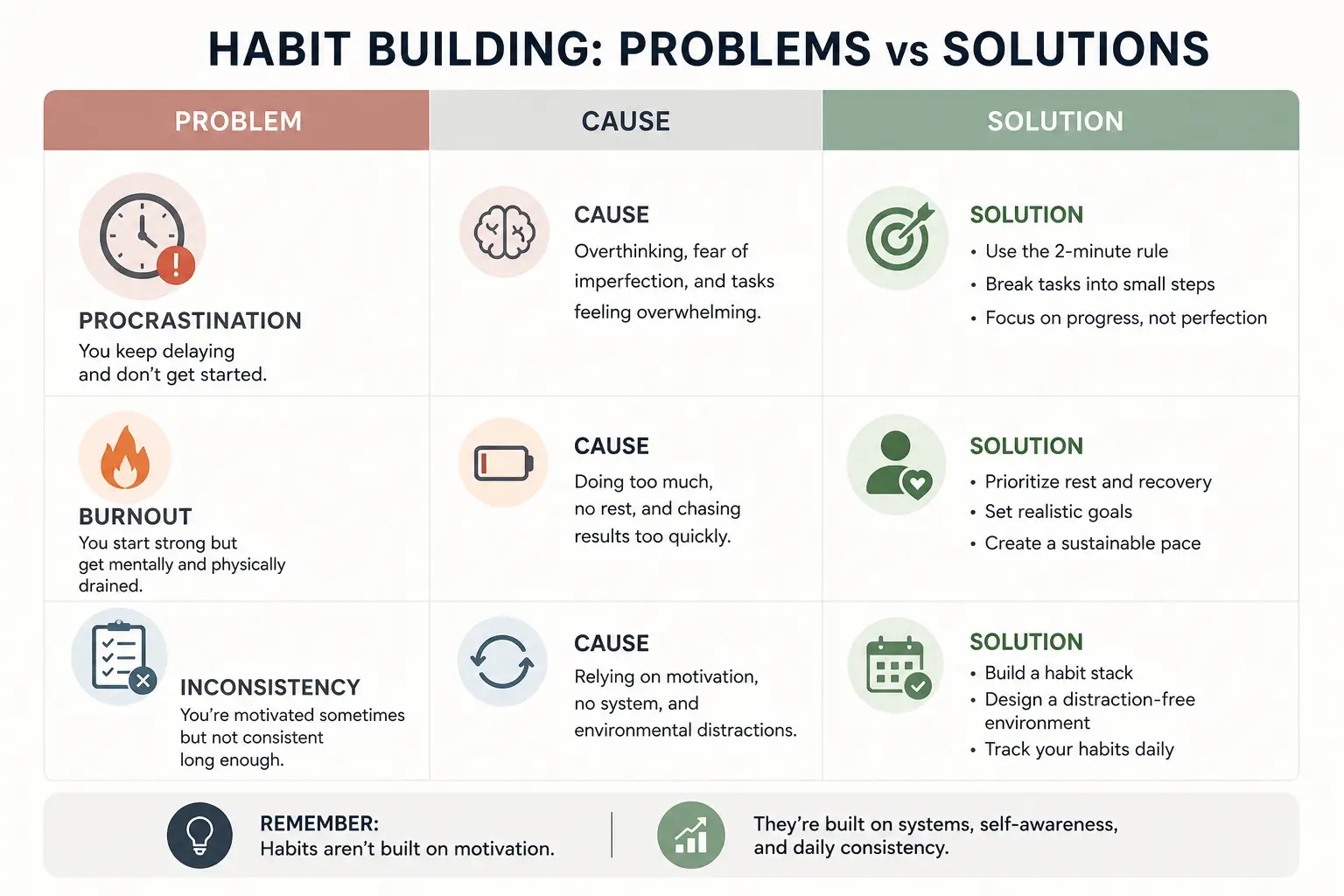
| Problem | Why It Happens | Solution |
|---|---|---|
| Procrastination | Task feels overwhelming | Break into smaller steps |
| Lack of motivation | Emotional dependency | Build routines |
| Burnout | Unrealistic expectations | Reduce intensity |
| Inconsistency | No tracking system | Weekly reviews |
Consistency fails when systems are missing. Structured routines and tracking create stability.
Habit Implementation: Turning the Checklist into Action
To turn the checklist into action, simplify execution.
Start with:
- 1–2 habits only
- Fixed time and clear trigger
Build consistency:
- Perform habits at the same time daily
- Reduce variability and decision-making
Scale gradually:
- Add new habits only after existing ones stabilize
This approach aligns with habit formation principles and reduces overwhelm.
Real-Life Scenarios: Reinventing Yourself in Practice
Beginner Example
- Starts waking up earlier
- Builds a simple morning routine
- Focuses on consistency over perfection
Advanced Example
- Redesigns career path
- Builds a new identity through structured habits
- Integrates long-term systems
These examples show that reinvention scales with commitment and structure.
Common Myths About Reinventing Yourself
Myth: Reinvention requires drastic change
Reality: Small changes compound over time
Myth: You need motivation to start
Reality: Action creates motivation
Myth: It’s too late to change
Reality: Identity remains flexible at any stage of life
Sustainable Reinvention vs Short-Term Change
| Sustainable | Unsustainable |
|---|---|
| Gradual habit building | Extreme routines |
| Realistic systems | All-or-nothing mindset |
| Consistent effort | Burnout cycles |
Long-term change depends on sustainability, not intensity.
Conclusion
A reinvent yourself checklist transforms abstract desire into structured action. Real change doesn’t come from sudden breakthroughs—it comes from consistent, intentional behaviors repeated over time.
Focus on building habits that align with your future identity, and allow progress to compound. Reinvention is not about perfection—it’s about persistence.
FAQs
1. Can I reinvent myself at any stage in life?
Yes, reinvention is possible at any age because habits and thinking patterns can always be changed with consistent effort.
2. Why do I struggle with consistency when trying to change?
Consistency often fails when you rely on motivation instead of systems. Structured routines reduce decision-making and make behavior automatic.
3. How do I start reinventing myself today?
Start with one small habit. Choose a fixed time and commit to repeating it daily. Focus on consistency rather than intensity.
4. What if I lose motivation after a few days?
Loss of motivation is normal. Continue taking action through discipline and routine rather than waiting for motivation to return.
5. How do I know if my reinvention is working?
You’ll notice gradual improvements in your habits, mindset, and daily structure before major results appear.
6. Is it better to change everything at once or slowly?
Slow, consistent changes are more effective because they are easier to maintain and lead to long-term transformation.










One Response