
Introduction
Advaita Vedanta meditation is a self-inquiry-based practice rooted in non-dual philosophy, focusing on realizing the true nature of the self beyond thoughts, ego, and identity. Unlike traditional meditation techniques that emphasize concentration or mindfulness, Advaita meditation guides you toward understanding that the observer and the observed are not separate. This approach shifts your identity from mental activity to pure awareness, which directly impacts how you think, react, and behave. Instead of trying to control the mind, it helps you understand it—leading to long-term clarity, reduced mental noise, and more grounded decision-making.
Quick Summary
- Advaita Vedanta meditation is based on non-duality (oneness of self and reality)
- It focuses on self-inquiry rather than thought control
- The goal is realization, not relaxation or temporary calm
- It works by shifting identity from ego to awareness
What Is Advaita Vedanta Meditation?
Understanding Advaita Vedanta Meaning
Advaita Vedanta meditation is based on the principles of advaita vedanta meaning, where “Advaita” means non-duality (not two), and “Vedanta” refers to the culmination of Vedic wisdom. In simple terms, what is advaita vedanta can be understood as a philosophy that teaches there is no separation between the self and reality.
The meaning of advaita emphasizes that you are not your mind, body, or thoughts—you are pure awareness observing them. The vedanta meaning extends this idea into a complete philosophical system explaining consciousness and existence.
There are two ways to understand this:
- Philosophical interpretation: Explains reality and consciousness conceptually
- Practical interpretation: Applies self-inquiry to directly experience awareness
Understanding the meaning is essential before practice because without it, meditation becomes another attempt to control the mind rather than observe it.
Core Principles Behind Advaita Vedanta Philosophy
Non-Dual Awareness (Advaita)
Advaita Vedanta philosophy teaches that there is no separation between the self and the universe. The sense of individuality is an illusion created by the ego.
- Ego = constructed identity based on thoughts and experiences
- Reality = unified awareness
Self-Inquiry (Atma Vichara)
A central practice in advaita vedanta philosophy and vedanta philosophy is self-inquiry:
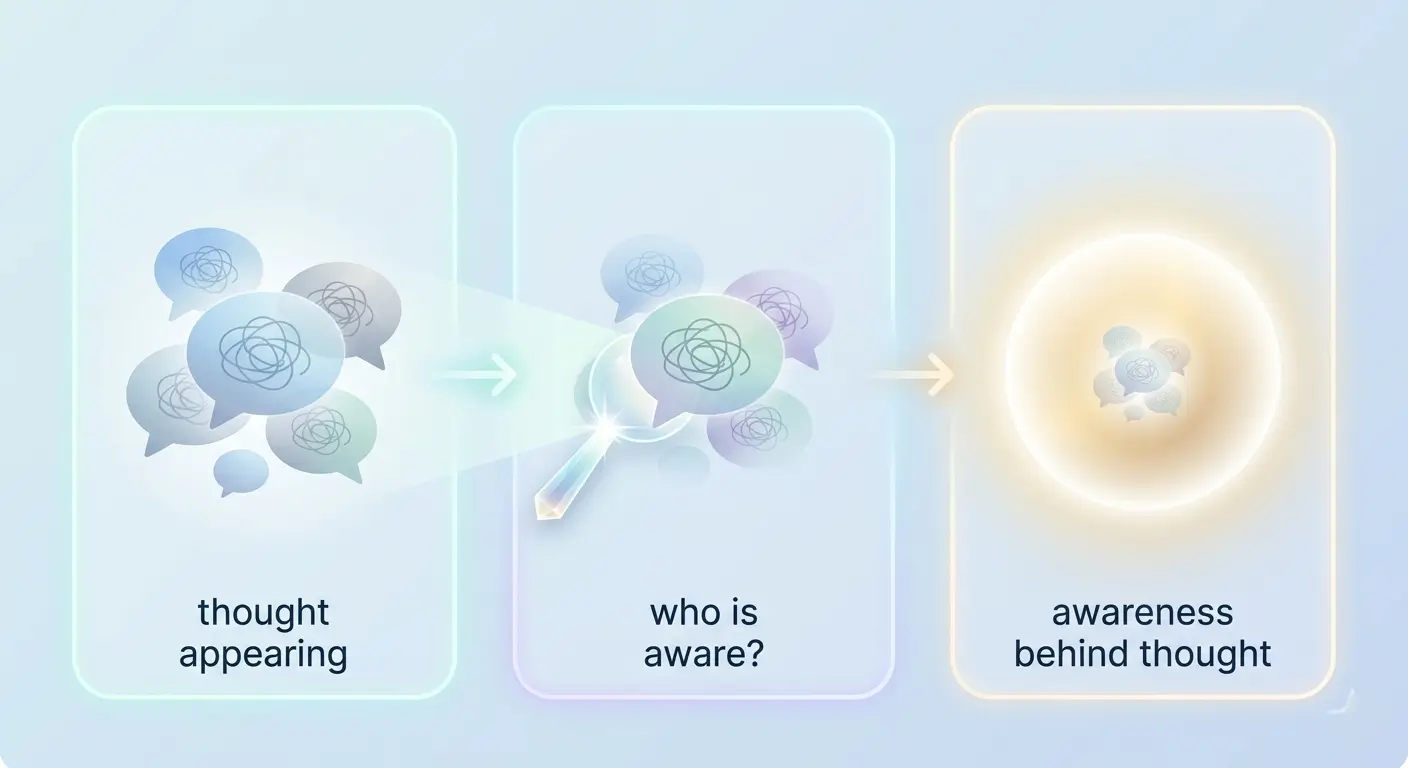
- Asking: “Who am I?”
- Observing thoughts without identifying with them
- Recognizing that awareness exists before thought
Detachment from Ego
This involves shifting perspective:
- From: “I am thinking”
- To: “Thoughts are appearing”
Cause-effect relationship:
Identification with thoughts creates emotional reactions and suffering. When you stop identifying, emotional intensity reduces, leading to better emotional regulation and less overthinking.
How Advaita Vedanta Meditation Works (Psychological + Behavioral View)
The Mechanism of Awareness Shift
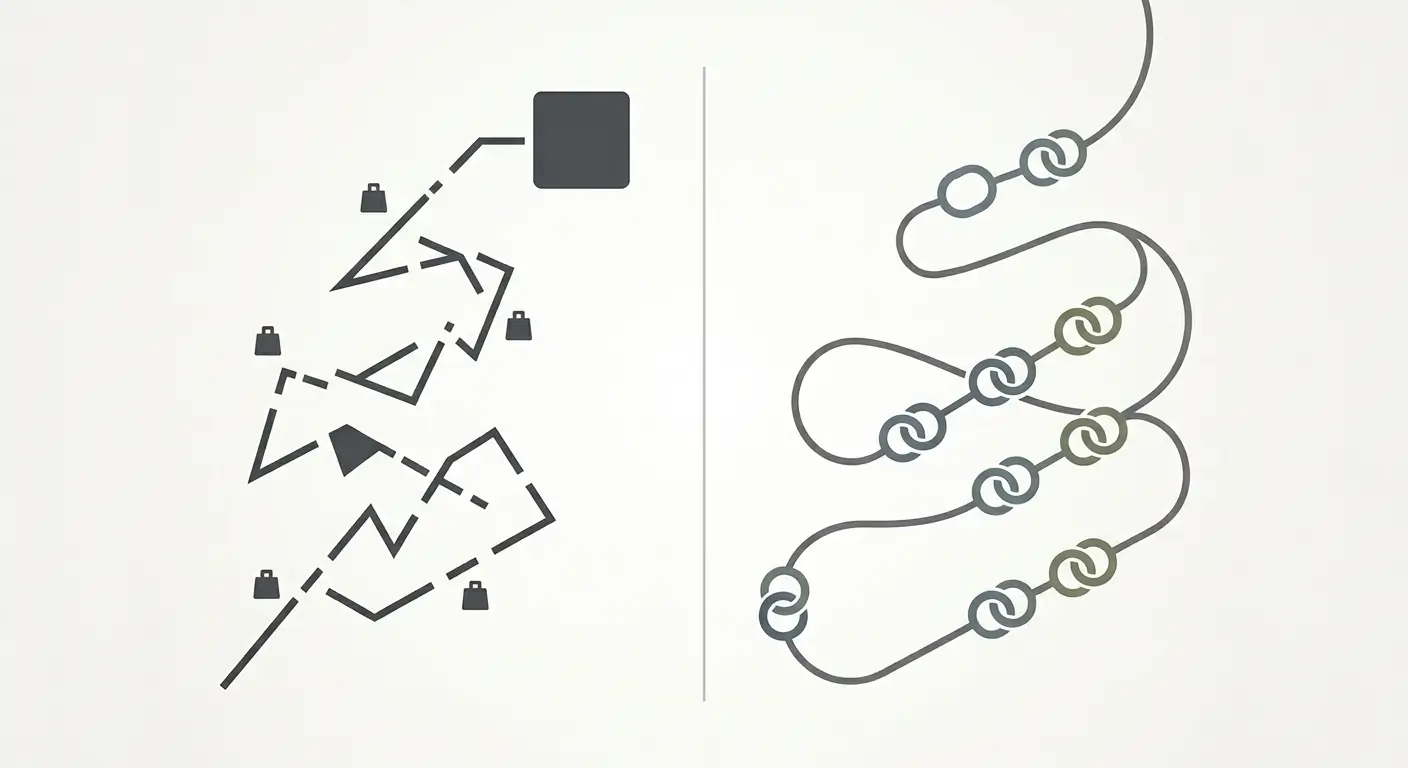
Advaita meditation works by shifting from reactive thinking to observing awareness.
- Thoughts continue, but identification decreases
- Mental noise reduces because you stop engaging with every thought
Why It Changes Behavior
Behavior is driven by identity. When identity shifts, behavior changes.
- Less emotional reactivity
- Improved clarity in decisions
- Reduced attachment to outcomes
From a behavioral psychology perspective:
- Awareness interrupts automatic patterns
- It breaks habit loops by removing unconscious reactions
Real-Life Applications
- Stress: Observe thoughts instead of reacting
- Anxiety: Reduce identification with fear-based thinking
- Overthinking: Create distance between you and thoughts
Advaita Vedanta Meditation Technique (Step-by-Step)

Basic Practice Framework
The advaita vedanta meditation technique, also called advaita meditation or vedanta meditation, follows a simple process:
- Sit quietly and observe your thoughts
- Ask internally: “Who is aware of this thought?”
- Notice the awareness behind the thought
- Rest in that awareness without forcing silence
- Repeat gently when distractions arise
Key Practice Principles
- No forceful concentration
- No suppression of thoughts
- Awareness is the goal, not emptiness
Beginner Mistakes
- Trying to control or stop thoughts
- Expecting a blank mind
- Practicing inconsistently
Key insight: Consistency matters more than intensity. Short daily practice builds deeper awareness than occasional long sessions.
Advaita Meditation vs Other Meditation Styles
| Aspect | Advaita Vedanta Meditation | Mindfulness Meditation | Transcendental Meditation |
|---|---|---|---|
| Focus | Self-inquiry | Present moment awareness | Mantra repetition |
| Goal | Realization of true self | Awareness & calm | Relaxation & transcendence |
| Method | Questioning identity | Observing sensations | Repeating sound |
| Effort | Effortless awareness | Gentle focus | Structured repetition |
Including concepts like transcendental meditation advaita vedanta, the key difference is not superiority but intention:
- Choose Advaita for identity exploration
- Choose mindfulness for present awareness
- Choose mantra-based methods for relaxation
Difference Between Advaita Vedanta and Other Philosophies
Advaita Vedanta vs Buddhism
The difference between buddhism and advaita vedanta lies in how the self is defined:
- Advaita: Self is pure awareness
- Buddhism: No permanent self (Anatta)
Vedanta vs Advaita
The difference between vedanta and advaita is:
- Vedanta: Broad philosophical system
- Advaita: Non-dual interpretation of Vedanta
Common confusion: Beginners often mix these concepts because both discuss consciousness, but their interpretations differ subtly.
Why People Struggle with Advaita Meditation
Common Psychological Barriers
- Need to control thoughts
- Overthinking the practice
- Expecting instant results
- Ego resistance (fear of losing identity)
Behavioral Patterns That Block Progress
- Inconsistency
- Treating it like a productivity hack
- Seeking “experiences” instead of awareness
Reality check: Progress is subtle. It shows as reduced reactivity, not dramatic experiences.
How to Build a Consistent Advaita Practice
Habit Integration Strategy
- Start with 5–10 minutes daily
- Attach practice to existing routines (morning/evening)
- Maintain awareness during daily activities
System vs Goal Approach
| Goal-Based Approach | System-Based Approach |
|---|---|
| “I want enlightenment” | “I observe awareness daily” |
| Outcome-focused | Process-focused |
| Leads to frustration | Builds consistency |
Consistency Timeline
- Week 1–2: Learning the process
- Week 3–4: Reduced mental reactivity
- Week 5+: Improved clarity and awareness
Key principle: Identity-based habits (“I practice awareness daily”) create long-term consistency.
Practical Real-Life Applications
Managing Overthinking
- Observing thoughts reduces identification
- Creates mental distance
Emotional Regulation
- Awareness prevents reactive behavior
- Helps pause before responding
Decision-Making Clarity
- Less mental noise leads to clearer thinking
Beginner vs Advanced Use
- Beginner: Notice thoughts during stress
- Advanced: Maintain awareness in all activities
Applications extend to:
- Work (focus and clarity)
- Relationships (reduced emotional reactions)
- Stress management (calm decision-making)
Common Myths About Advaita Meditation
- “It requires stopping thoughts” → False
- “It’s only philosophical, not practical” → False
- “You need years of study before starting” → False
Reality: The practice is simple but requires consistent application.
Mistakes vs Solutions (Table Section)
| Mistake | Why It Happens | Solution |
|---|---|---|
| Trying to control thoughts | Misunderstanding meditation | Observe instead of control |
| Expecting fast results | Instant gratification mindset | Focus on process |
| Overanalyzing concepts | Intellectualization | Practice direct experience |
| Inconsistency | Lack of system | Build routine |
Prevention strategy: Build structured habits and focus on daily repetition rather than outcomes.
Conclusion
Advaita Vedanta meditation is not about achieving a special state but realizing what is already present—pure awareness. By shifting your identity from thoughts to observation, you reduce mental suffering, improve clarity, and develop a more stable way of living. The key is consistency, not intensity. When practiced regularly with proper understanding, it becomes a powerful tool for emotional balance, clearer thinking, and long-term personal growth.
FAQs
1. What is Advaita Vedanta meditation in simple terms?
It is a meditation practice focused on realizing that you are awareness itself, not your thoughts or identity.
2. How is Advaita meditation different from mindfulness?
Mindfulness observes experiences, while Advaita questions the observer itself.
3. Why do I struggle with self-inquiry meditation?
Because the mind seeks control and answers, while this practice requires observation without control.
4. Can beginners practice Advaita Vedanta meditation?
Yes, beginners can start immediately with simple self-inquiry and awareness practices.
5. How long does it take to see results?
Results depend on consistency, but mental clarity and reduced reactivity can appear early with regular practice.
6. What if I can’t stop my thoughts during meditation?
You don’t need to stop thoughts—just observe them and notice the awareness behind them.