
 Introduction
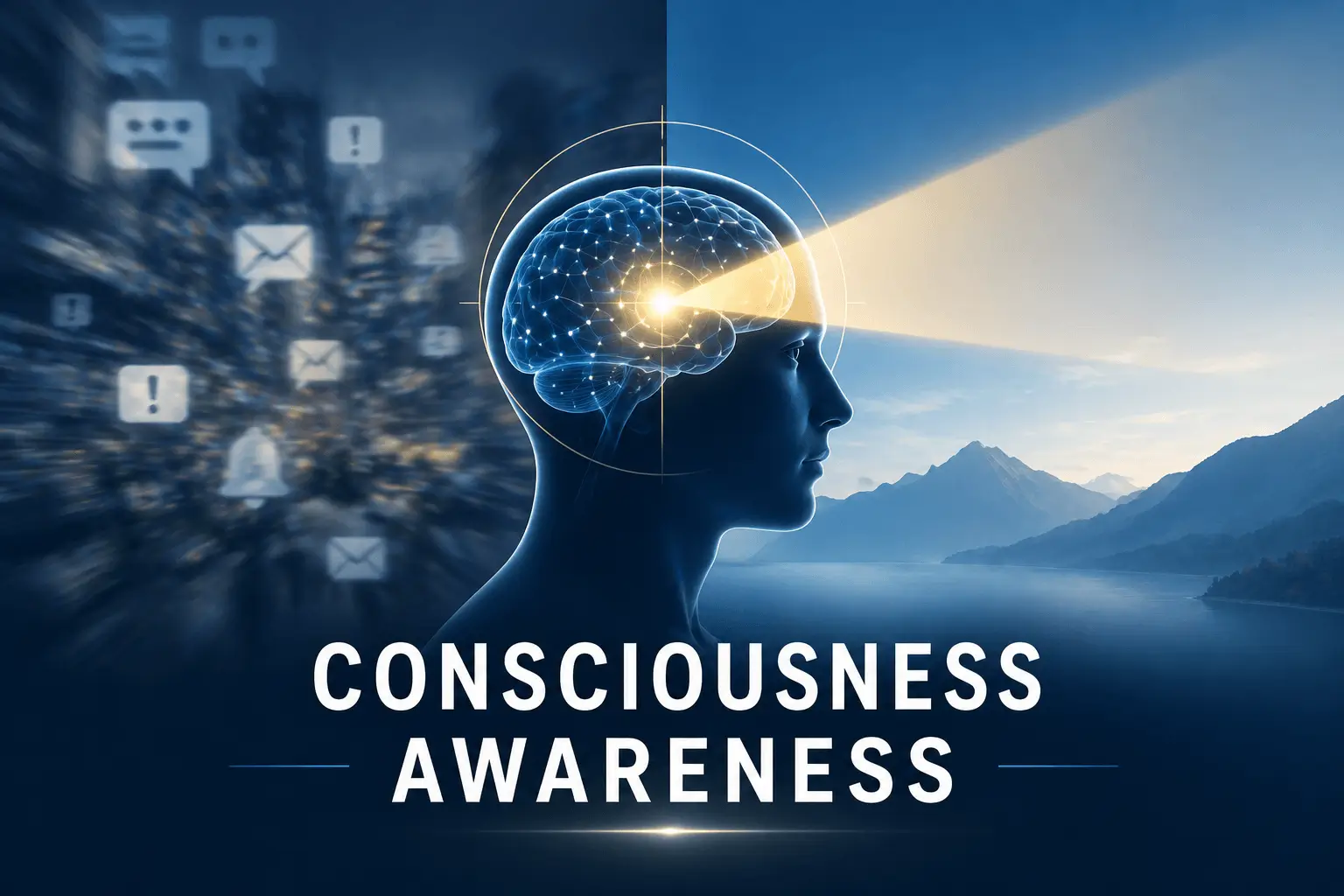
Consciousness awareness refers to the state of being mentally present and aware of both internal experiences (thoughts, emotions) and external stimuli (environment, people, events). In psychology and self-improvement, it forms the foundation of attention, decision-making, emotional regulation, and personal growth. Understanding how consciousness awareness works helps explain why people struggle with focus, habits, and behavior control. It also reveals how improving awareness leads to better decision-making and stronger discipline. By learning the difference between consciousness and awareness, individuals can develop practical skills to improve attention, reduce impulsive behavior, and build consistent habits.
Quick Summary
- Consciousness = the overall state of being awake and mentally active
- Awareness = the specific focus of attention within consciousness
- Consciousness is broad; awareness is selective
- Improving awareness leads to better habits, decisions, and emotional control
What Is Consciousness Awareness? (Meaning & Definition in Psychology)
Consciousness awareness is the combined ability to be mentally awake while directing attention toward specific thoughts or stimuli.
Key Explanation
It includes:
- Being awake and mentally active (consciousness)
- Focusing attention on specific experiences (awareness)
Core Concepts Covered
- Consciousness meaning in psychology: awareness of self and environment
- Definition of consciousness in psychology: the state of experiencing internal and external reality
- Awareness definition: focused attention on a particular stimulus
Expansion
The brain constantly receives vast amounts of information, but only a small portion reaches conscious awareness. This filtering happens through the brain’s attention system, which selects what is important based on goals, habits, and emotional relevance. This is why conscious awareness is limited but trainable.
Difference Between Awareness and Consciousness
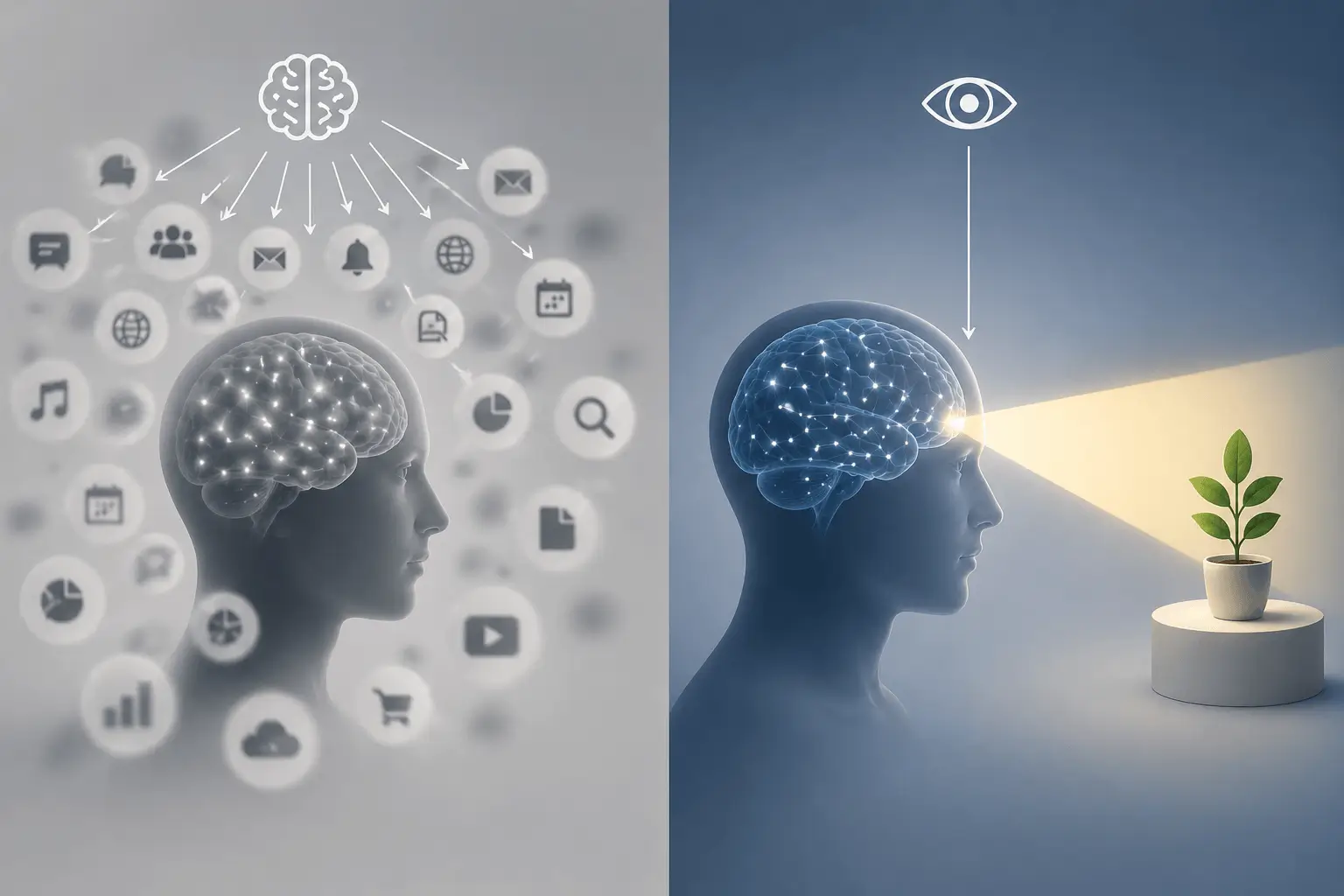
The difference between awareness and consciousness is that consciousness is the overall mental state, while awareness is the selective focus within that state.
| Aspect | Consciousness | Awareness |
|---|---|---|
| Scope | Broad mental state | Narrow focus |
| Function | Being awake and experiencing | Noticing specific details |
| Example | Being awake in a room | Noticing a sound in the room |
| Control | Passive | Active and trainable |
Cause-Effect Insight
- Without consciousness → awareness cannot exist
- Without awareness → decision-making becomes poor and reactive
Real-Life Examples of Consciousness vs Awareness
Understanding consciousness vs awareness becomes clearer through daily behavior patterns:
- Driving on autopilot vs noticing road conditions
- Eating while distracted vs mindful eating
- Reacting emotionally vs observing emotions before reacting
Key Insight
Low awareness leads to:
- Automatic habits
- Repeated mistakes
- Emotional reactivity
High awareness leads to:
- Better control
- Intentional actions
- Improved outcomes
Levels of Consciousness and Awareness
The levels of consciousness awareness explain how the mind operates:
- Unconscious: automatic behaviors (habits)
- Subconscious: stored beliefs and patterns
- Conscious: active thinking and decision-making
- Meta-awareness: awareness of your own awareness
Key Insight
Most behaviors are driven by subconscious patterns. Growth happens when individuals bring these patterns into conscious awareness and change them intentionally.
Consciousness Awareness in Psychology
In psychology, consciousness awareness refers to awareness of internal and external stimuli and is closely linked to attention, arousal, and cognitive processing.
Scientific Perspective
It involves:
- Attention systems (what you focus on)
- Arousal levels (alertness)
- Cognitive processing (interpretation of information)
Neurobiological Insight
Brain networks such as the prefrontal cortex and attention systems regulate what enters awareness. This explains why focus can be improved through training and why distractions weaken awareness.
Consciousness vs Awareness in Different Perspectives
| Perspective | Consciousness | Awareness |
|---|---|---|
| Psychology | Mental state | Attention mechanism |
| Spirituality | Universal presence | Pure observation |
| Buddhism | Conditioned mind | Unconditioned awareness |
Key Insight
Psychology focuses on practical application (attention and behavior), while spiritual perspectives focus on observation and detachment. For self-improvement, the psychological approach is more actionable.
Self-Awareness and Consciousness
Self-awareness is the ability to observe your own thoughts, emotions, and behaviors, while consciousness is the mental space where this observation happens.
Key Insight
- Consciousness = platform
- Self-awareness = function within that platform
Benefits
- Better emotional control
- Improved relationships
- Clearer decision-making
How Conscious Awareness Works (Attention & Focus Mechanism)
Focusing consciousness on a specific stimulus is called attention.
Process Breakdown
- Stimulus appears
- Brain filters information
- Awareness selects focus
- Conscious mind interprets meaning
Key Insight
Attention control directly impacts productivity and discipline. What you focus on determines your behavior.
Practical Benefits of Improving Consciousness Awareness
Improving consciousness awareness leads to measurable outcomes:
- Better decision-making
- Emotional regulation
- Reduced impulsive behavior
- Increased productivity
- Stronger habit control
Cause-Effect Relationship
Awareness → Control → Better outcomes
Habit Implementation: How to Develop Conscious Awareness
Step-by-Step Framework
- Pause before reacting
- Observe thoughts without judgment
- Label emotions (reduces intensity)
- Redirect focus intentionally
- Repeat consistently
Key Insight
Consciousness awareness mindfulness works like a muscle. Repetition strengthens attention control over time.
Routine & System Building for Awareness
Daily Practices
- Mindful breathing (5–10 minutes)
- Journaling thoughts
- End-of-day reflection
- Single-tasking instead of multitasking
Key Insight
Systems are more effective than motivation. Small, consistent actions build long-term awareness.
Mental & Behavioral Barriers to Awareness
Why People Struggle
- Autopilot habits
- Overstimulation (phones, media)
- Emotional avoidance
- Lack of reflection
Psychological Insight
Comfort zone bias and resistance to discomfort prevent people from becoming aware of their behavior patterns.
Problem–Solution Section
1. Procrastination
- Why: Avoidance of discomfort
- Fix: Identify triggers and break tasks into smaller steps
2. Lack of Motivation
- Why: Emotion-driven behavior
- Fix: Act despite feelings using awareness
3. Inconsistency
- Why: Lack of awareness of patterns
- Fix: Track behavior and reflect daily
4. Overthinking
- Why: Excess awareness without control
- Fix: Shift from thinking to observing
5. Burnout
- Why: Ignoring internal signals
- Fix: Recognize limits and prioritize recovery
Common Myths About Consciousness Awareness
- “More thinking = more awareness” (False)
- “Awareness is automatic” (False)
- “You need motivation to be aware” (False)
What Actually Works
- Training attention daily
- Reducing distractions
- Practicing observation without reaction
Conclusion
Consciousness awareness is the foundation of how individuals experience and respond to life. Consciousness provides the mental space for experience, while awareness determines focus within that space. Improving awareness is a practical and trainable skill that directly impacts habits, decision-making, and emotional control. By consistently practicing attention and observation, individuals can move from reactive behavior to intentional action. Small, repeated efforts in awareness lead to long-term changes in mindset, productivity, and personal growth.
FAQs
1. What is the difference between consciousness and awareness?
Consciousness is the overall state of being mentally awake, while awareness is the ability to focus attention on specific thoughts, feelings, or stimuli.
2. Why do I struggle with awareness in daily life?
Most people operate on autopilot due to habits, distractions, and lack of reflection, which reduces conscious awareness.
3. How can I increase my conscious awareness?
Practice mindfulness, reduce distractions, observe your thoughts, and reflect regularly on your behavior and emotions.
4. Is awareness the same as self-awareness?
No. Awareness can focus on anything, while self-awareness specifically involves understanding your own thoughts, emotions, and behaviors.
5. Can improving awareness help with productivity?
Yes. Increased awareness improves focus, reduces distractions, and helps you make intentional and effective decisions.










One Response