

Introduction
The best version of yourself refers to becoming a more aligned, self-aware, and disciplined version of who you are—where your habits, mindset, and actions consistently reflect your highest potential. It is not about perfection but about continuous improvement through intentional behavior and clarity. Real self-improvement happens when daily actions support long-term goals. Instead of chasing drastic change, sustainable growth focuses on small, consistent steps. When you align your identity with your actions, progress becomes natural rather than forced.
Quick Summary
- The best version of yourself is built through consistent habits, not sudden transformation
- It requires aligning mindset, behavior, and daily actions with long-term goals
- Growth comes from discipline, self-awareness, and identity-based change
- Sustainable improvement focuses on systems, not motivation alone
What Does “Best Version of Yourself” Actually Mean?
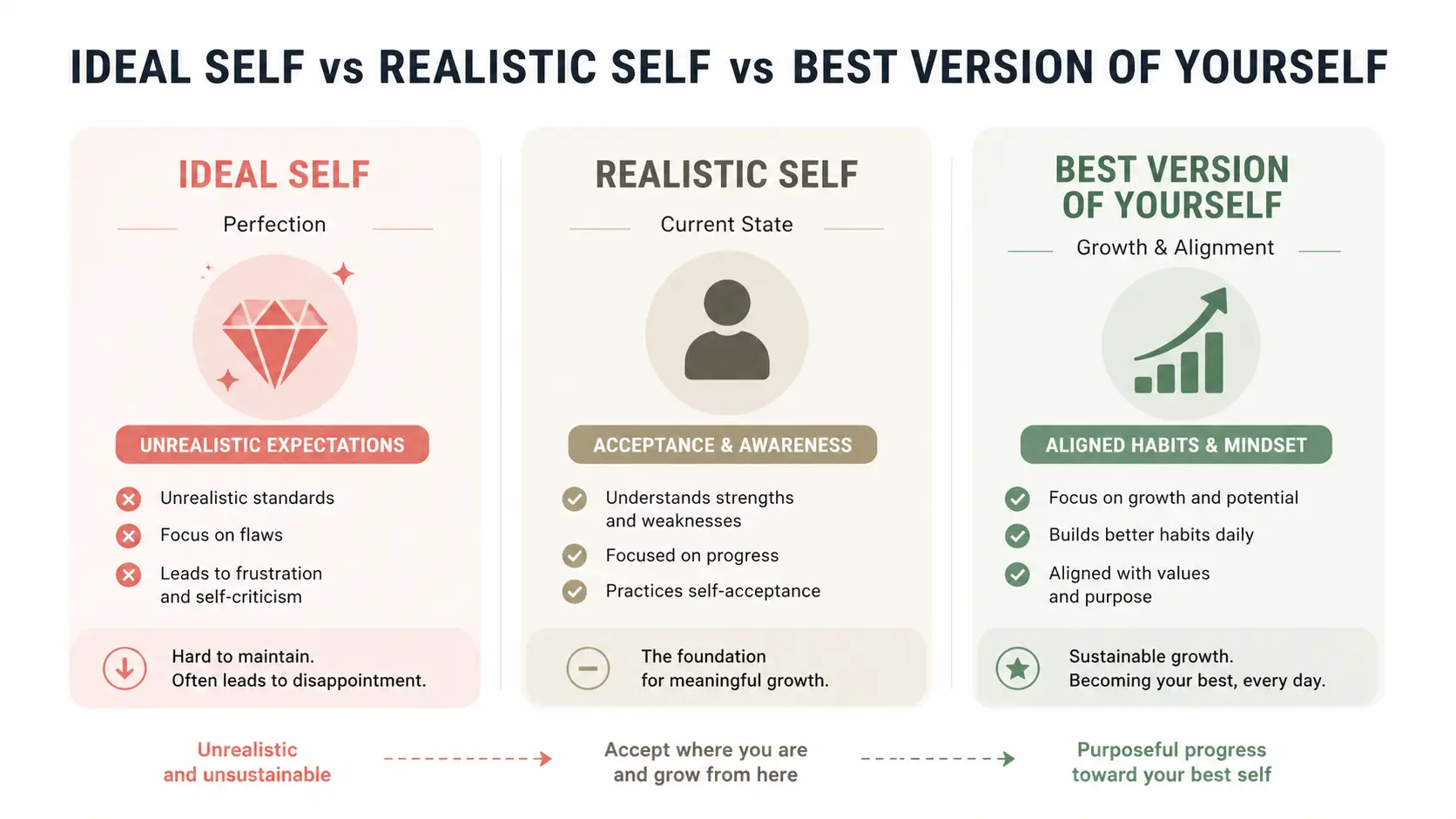
The best version of yourself means becoming a version of yourself where your daily behavior aligns with your values, goals, and potential. It is not about becoming perfect but about becoming intentional and consistent.
Many people confuse the ideal self with a flawless version of themselves. In reality, growth is about building a realistic self—someone who improves gradually. This concept also appears globally, such as versi terbaik diri sendiri, reflecting a universal desire for self-alignment.
Key understanding:
- Self-improvement starts with self-awareness
- Growth happens when mindset and behavior align
- It is a continuous process, not a final state
Identity-based growth focuses on who you become, not just what you achieve.
Why Most People Struggle to Become the Best Version of Themselves
Most people struggle because of internal psychological barriers rather than lack of ability.
Common challenges include:
- Fear of failure and self-doubt
- Procrastination driven by overwhelm
- Lack of clarity about goals
Behavioral patterns:
- Overthinking leads to inaction
- Motivation is inconsistent by nature
- People rely on feelings instead of systems
Emotional resistance keeps individuals in their comfort zones. Without structured systems, progress becomes unpredictable and short-lived.
The Core Pillars of Becoming the Best Version of Yourself
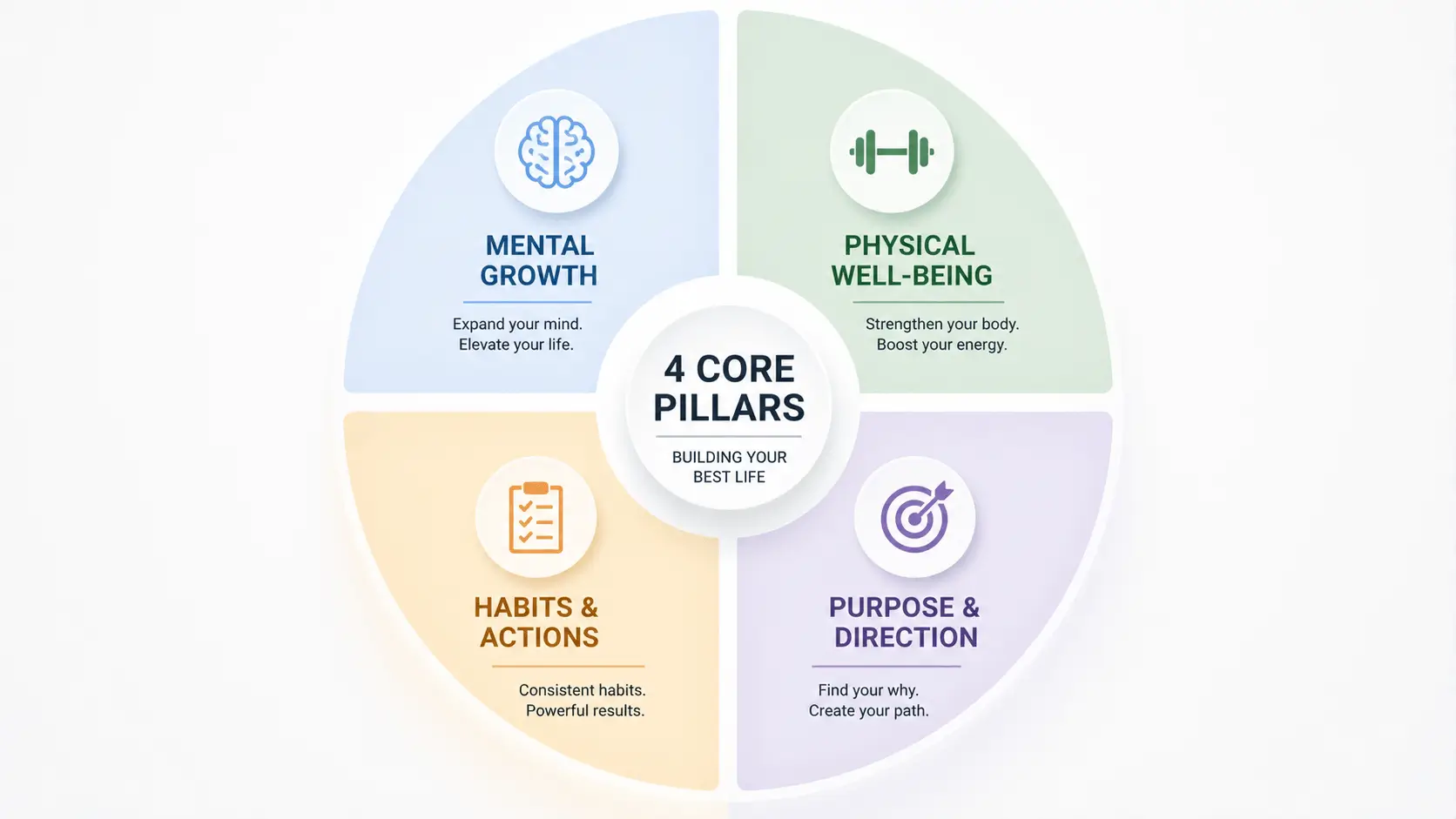
Mental Growth (Mindset & Thinking Patterns)
Mental growth involves developing self-awareness and emotional control. A growth mindset allows you to adapt and improve, while a fixed mindset limits progress.
Key elements:
- Recognizing negative thought patterns
- Practicing emotional regulation
- Adopting a growth-oriented perspective
Physical Well-being (Energy & Discipline)
Your physical state directly impacts your behavior and productivity.
Core factors:
- Sleep improves cognitive function and discipline
- Exercise boosts energy and mood
- Nutrition supports focus and consistency
Improving physical health is essential for becoming the best version of yourself physically.
Habits & Daily Actions
Daily habits shape long-term identity. Small actions repeated consistently create lasting change.
Principles:
- Habits compound over time
- Identity-based habits reinforce behavior
- Consistency matters more than intensity
Purpose & Direction
Clear direction reduces confusion and increases motivation.
Key insights:
- Defined goals create focus
- Purpose provides meaning to actions
- Direction simplifies decision-making
How to Become the Best Version of Yourself (Step-by-Step Framework)
Follow this structured process:
- Define your current vs desired self
Identify gaps between where you are and where you want to be - Identify limiting habits and beliefs
Recognize behaviors that block progress - Build 2–3 keystone habits
Focus on habits that influence multiple areas - Create a simple daily system
Structure routines that support consistency - Track progress and adjust
Monitor behavior and refine your system
This framework ensures both mental and behavioral alignment.
Motivation vs Discipline — What Actually Drives Growth?
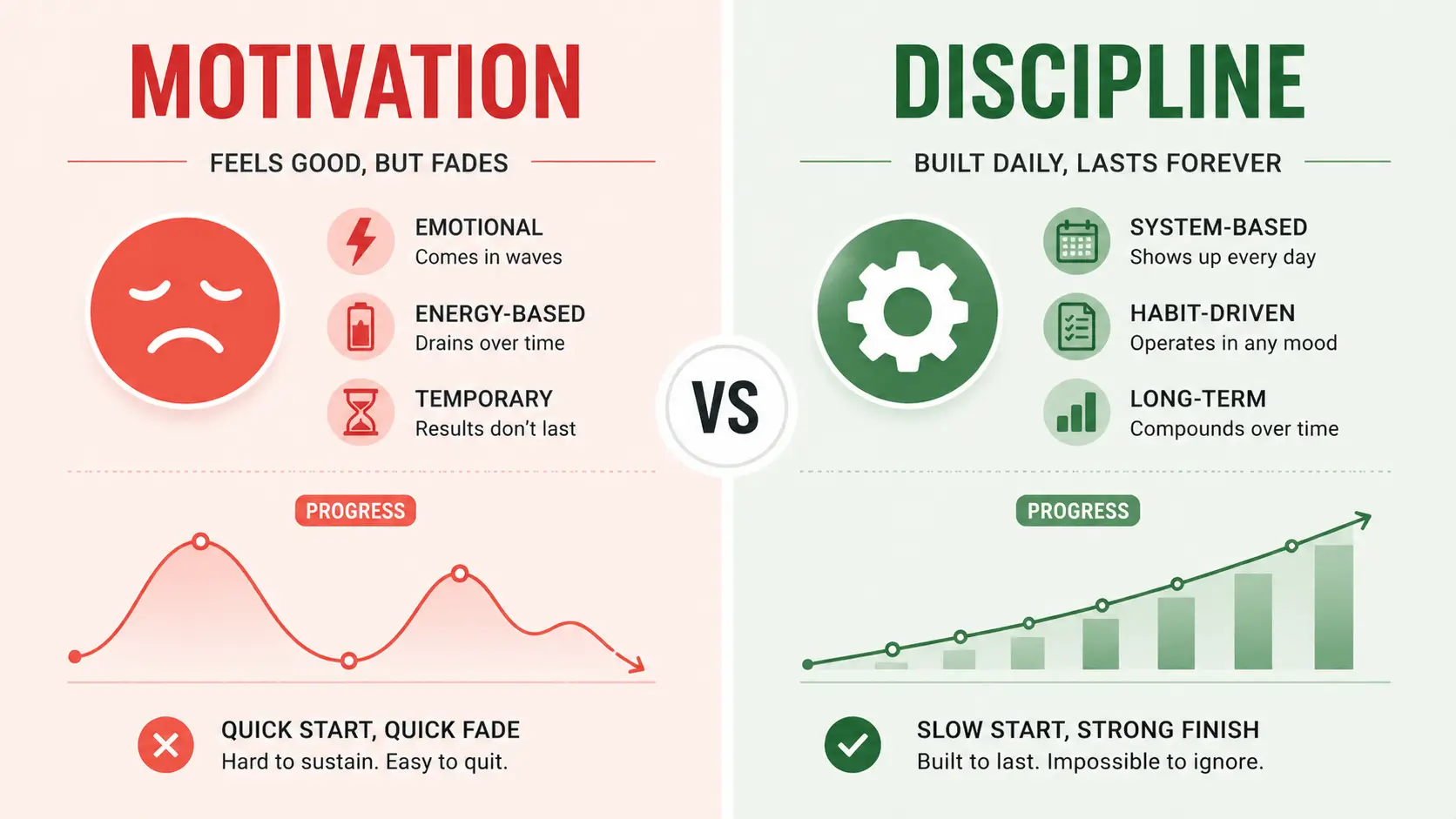
Discipline drives long-term growth because it creates consistency regardless of emotions, while motivation is temporary and unreliable.
| Motivation | Discipline |
|---|---|
| Emotion-based | System-based |
| Temporary | Consistent |
| Requires feeling ready | Works regardless of mood |
| Unreliable long-term | Sustainable |
Key Insight:
Discipline creates the structure that motivation cannot maintain.
Consistency vs Intensity — Why Small Actions Win Long-Term
Consistency leads to sustainable growth because repeated small actions build habits over time, while intense effort often leads to burnout.
| Consistency | Intensity |
|---|---|
| Small daily effort | Occasional extreme effort |
| Builds habits | Leads to burnout |
| Sustainable | Hard to maintain |
Behavioral psychology shows that repetition strengthens neural pathways, making actions easier over time.
Habit Building System for Becoming Your Best Self
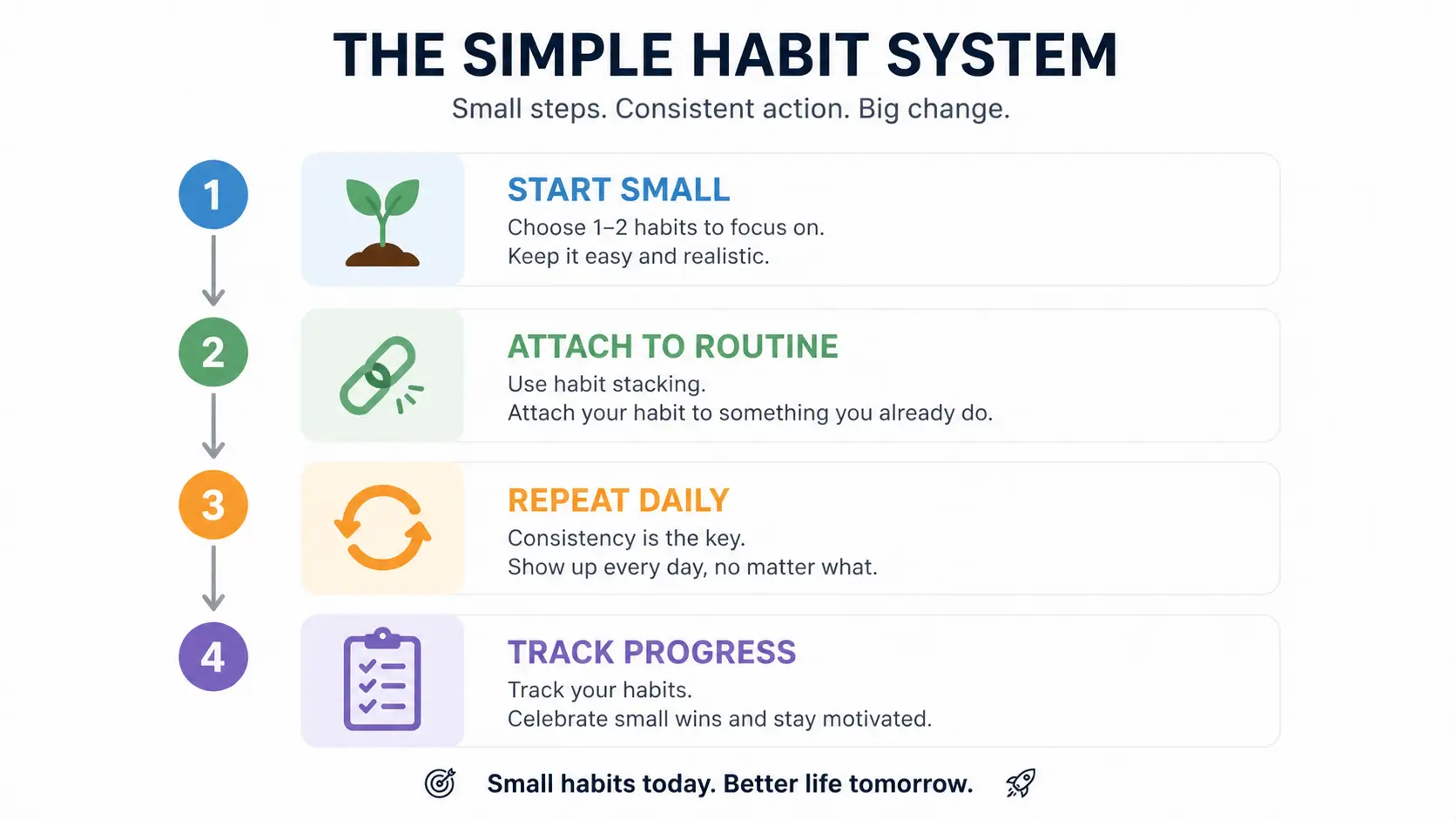
Practical implementation:
- Start with 1–2 habits only
- Attach new habits to existing routines
- Focus on repetition, not perfection
- Track habits visually
This approach reduces overwhelm and increases adherence.
Daily Routine Example for Self-Improvement
| Time | Activity | Purpose |
|---|---|---|
| Morning | Reflection / planning | Clarity |
| Midday | Deep work | Productivity |
| Evening | Review & learning | Growth |
| Night | Rest & reset | Recovery |
A structured routine creates stability and reduces decision fatigue.
Mental & Emotional Barriers (And How to Overcome Them)
Procrastination
Procrastination happens due to fear and overwhelm.
Solution: Break tasks into smaller, manageable actions.
Lack of Motivation
It occurs when goals are unclear.
Solution: Build systems instead of relying on mood.
Overthinking
Overthinking is driven by fear of failure.
Solution: Take imperfect action to create momentum.
Burnout
Burnout results from unsustainable effort.
Solution: Balance productivity with recovery.
Real-Life Application — Beginner vs Advanced Approach
Beginner:
- Focus on awareness
- Start with one habit
Intermediate:
- Build structured routines
- Track consistency
Advanced:
- Optimize systems
- Focus on long-term goals
This progression ensures scalable growth.
Common Myths About Becoming Your Best Self
- Myth: You need motivation first
Reality: Action creates motivation - Myth: Change must be drastic
Reality: Small changes create lasting results
Misunderstanding these ideas leads to inconsistency.
What Actually Works vs What Sounds Good
| Sounds Good | Actually Works |
|---|---|
| Waiting for motivation | Building systems |
| Big goals | Small daily actions |
| Perfection | Consistency |
Real progress comes from practical execution, not ideal thinking.
Science-Backed Insight — Why Behavior Change Works
Behavior change works because repeated actions rewire neural pathways. Habit loops—cue, action, reward—reinforce behavior through dopamine release.
Key insight:
- Repetition strengthens identity
- Consistent behavior becomes automatic
- Small actions shape long-term change
This explains why systems outperform motivation.
Conclusion
Becoming the best version of yourself is not about chasing perfection but about building consistent habits, aligning your mindset, and taking intentional action daily. Real growth happens when you shift from relying on motivation to creating systems that support long-term change. Focus on small improvements, stay consistent, and your future self will reflect those choices.
FAQs
1. What does it mean to be the best version of yourself?
It means aligning your habits, mindset, and actions with your highest potential through continuous improvement.
2. Why do I struggle with consistency?
Because most people rely on motivation instead of systems and habits.
3. How do I stay disciplined long-term?
By creating routines that work even when motivation is low.
4. What if I lose motivation?
Focus on small actions—discipline maintains progress when motivation fades.
5. How long does it take to become a better version of yourself?
It is a continuous process, but noticeable change can begin within weeks of consistent action.









2 Responses