

Introduction
The best books about growth mindset teach a simple but powerful idea: abilities can be developed through effort, effective strategies, feedback, and persistence — rather than staying fixed from birth. But “best” is not a one-size-fits-all label. The right book depends on your age, goals, current understanding, and whether you want psychological theory, practical exercises, classroom application, or broader success principles. A growth mindset is also not the same as simply “thinking positively” — it’s a specific, testable belief about how learning works. This guide compares growth mindset books by purpose and reader type, rather than offering a generic list of titles.
Quick Summary
- The best growth mindset book depends on whether you want foundational theory, practical exercises, academic application, or broader personal development.
- Growth mindset centers on the belief that abilities can develop through effective strategies, effort, feedback, and persistence.
- Adults, students, children, educators, and parents often benefit from different types of growth mindset books.
- A useful book should explain the concept accurately while showing how to apply it during setbacks, mistakes, or difficult learning situations.
What Having a Growth Mindset Really Means
What is a growth mindset?
A growth mindset is the belief that intelligence and abilities can be developed over time through learning, effort, effective strategies, and constructive feedback. It contrasts with a fixed mindset, which treats talent and intelligence as static traits that either exist or don’t. The concept was popularized by psychologist Carol Dweck, whose research on motivation and achievement forms the conceptual foundation of nearly every credible book on the topic. Understanding this distinction matters because it shapes how a person interprets challenges, mistakes, and effort itself. .whose research on motivation and achievement forms the conceptual foundation of nearly every credible book on the topic. See our collection of growth mindset quotes from Carol Dweck for a quick look at her core ideas.
What is a positive growth mindset?
A positive growth mindset is not about assuming everyone can achieve anything without limits — it’s about maintaining realistic self-belief that improvement is possible through the right approach. It combines constructive feedback, willingness to change strategies, and sustained persistence, rather than blind optimism. A person with a genuinely positive growth mindset still acknowledges real constraints; they simply focus on what can be influenced through learning and effort.
Growth mindset vs. positive thinking
Growth mindset and positive thinking are often confused, but they operate differently. Growth mindset is about believing challenges can be overcome through learning and adaptation. Positive thinking is about maintaining an optimistic outlook, regardless of whether a strategy actually changes.
| Concept | Core idea | Response to difficulty | Main emphasis |
|---|---|---|---|
| Growth mindset | Abilities can develop | Learn, adapt, persist | Learning and development |
| Positive thinking | Focus on positive interpretations | Maintain optimism | Attitude |
| Fixed mindset | Abilities are relatively fixed | Avoid threats to ability | Protecting existing competence |
What Makes a Growth Mindset Book Worth Reading?
Accuracy and quality of the core ideas
The strongest growth mindset books ground their claims in credible psychological or educational research rather than oversimplified motivational slogans. Readers should look for authors who distinguish established findings from personal anecdotes, and who explain why a technique works rather than only asserting that it does.
Practical application
A book’s value increases significantly when it includes exercises, reflection questions, real-world examples, and concrete strategies. Books for better mindset or books for good mindset that stop at theory alone tend to produce awareness without behavior change, which limits their long-term impact.
Relevance to the reader
A book written primarily for educators may not translate well for a general adult reader, and vice versa. Age, career stage, learning environment, and personal goals all affect which book will actually be useful, which is why matching the book to the reader matters more than chasing a single “best overall” title.
Depth versus accessibility
Academic, research-oriented books offer depth and nuance but can be dense for newcomers. Accessible self-improvement books simplify concepts for quick understanding but may sacrifice detail. Beginners typically benefit from an accessible introduction first, while readers who already understand the basics may prefer a more detailed, research-driven treatment.
Best Books About Growth Mindset for Different Readers
Rather than an undifferentiated list, the most useful way to evaluate growth mindset books is by matching them to reader type and purpose. Each category below highlights the core focus, ideal reader, and practical value of that type of book.
Best growth mindset books for adults
Growth mindset books for adults work best when they connect the concept to work, relationships, learning new skills, resilience, and long-term goals. Beginners benefit most from books that clearly define the concept and provide everyday examples, while readers already familiar with the basics may prefer titles that go deeper into workplace application, leadership, or the underlying psychological research.
Best growth mindset books for students
Growth mindset books for students should focus on academic setbacks, study habits, interpreting feedback, and persisting through difficult subjects. The most useful titles turn abstract mindset language into practical study behaviors — for example, treating a failed test as information about which strategies to change rather than as a verdict on ability.
Best growth mindset books for kids
The best books about growth mindset for kids rely on age-appropriate storytelling to make abstract ideas concrete. Strong children’s books use relatable characters facing mistakes, setbacks, or new challenges, and show emotional development alongside perseverance. Because children learn through narrative and example rather than abstract explanation, storytelling quality matters as much as accuracy.
Best growth mindset books for 10-year-olds
Growth mindset books for 10-year-olds need vocabulary, illustrations, and pacing suited to that specific developmental stage. A book designed for teenagers often uses more abstract reasoning and mature themes that don’t land the same way with a 10-year-old, while a book designed for much younger children may feel oversimplified. The best fit uses concrete, story-driven examples with age-matched language and activities.
Books on Mindset and Success: How Do They Differ From Growth Mindset Books?
Books on mindset and success form a broader category that overlaps with — but isn’t identical to — growth mindset books. This wider category includes titles about achievement, resilience, discipline, confidence, and habit change. Not every “success mindset” book specifically addresses growth mindset theory; some focus more on motivation, productivity systems, or general self-improvement philosophy.
Growth mindset vs. broader success-oriented books
| Book category | Primary focus | Best for |
|---|---|---|
| Growth mindset | Developing abilities through learning | Understanding and applying growth mindset |
| Mindset and success | Achievement and personal development | Broader performance goals |
| Resilience | Recovering from setbacks | Coping with adversity |
| Habit-focused | Repeated behaviors and systems | Turning intentions into routines |
| Confidence-focused | Self-belief and action | Building confidence in specific situations |
How to Choose the Best Mindset Book for Your Goal
There is no single universally best mindset book — the right choice depends on what you’re trying to accomplish. Using a clear decision framework makes the selection process far more effective than browsing titles at random.
Choose based on your primary goal
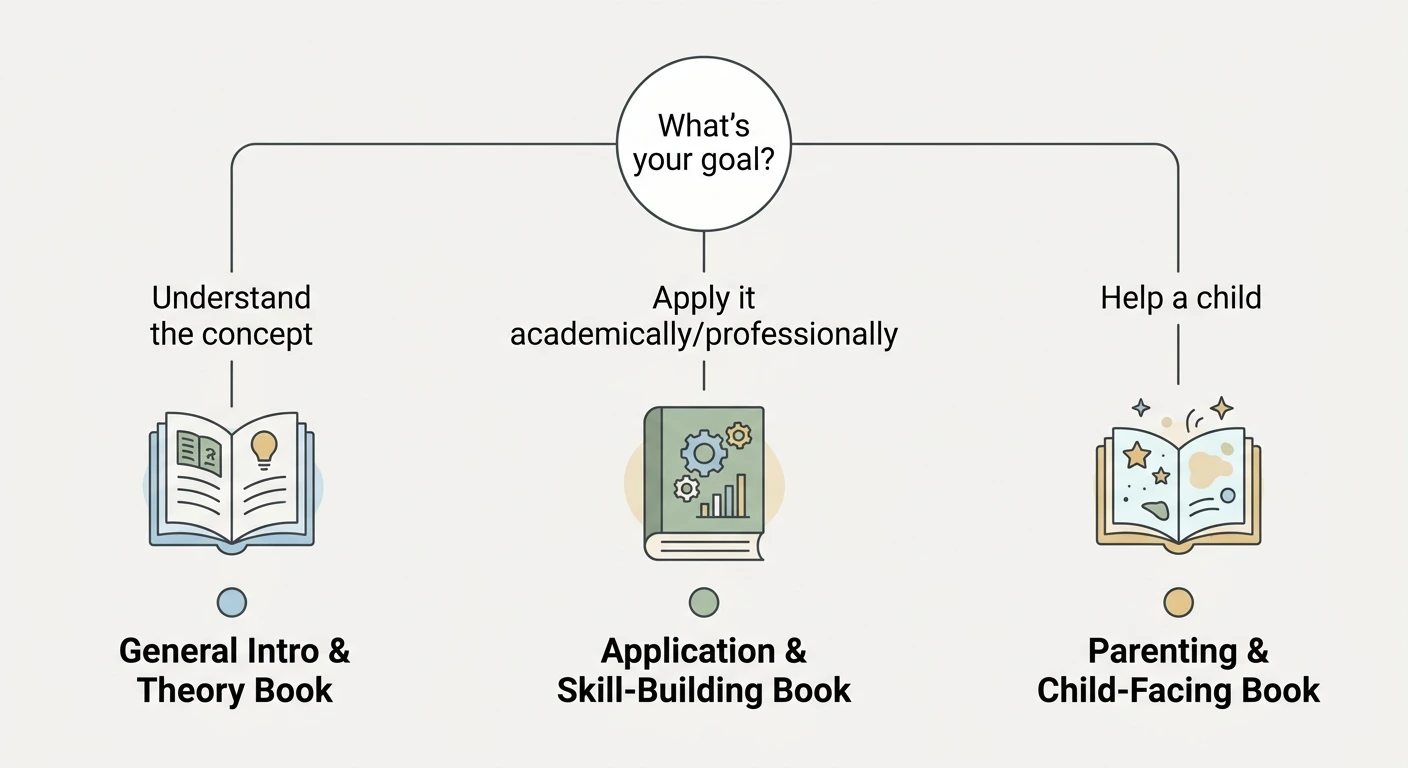
Consider which of these best describes your objective:
- Understanding growth mindset from the beginning
- Improving academic performance
- Helping a child develop healthier attitudes toward mistakes
- Building resilience
- Improving professional performance
- Developing better learning habits
- Understanding the psychological research behind the concept
Choose based on your experience level
- Beginner: Look for accessible explanations and practical, everyday examples.
- Intermediate: Look for deeper application, reflection prompts, and real-world scenarios.
- Advanced: Look for research-based analysis, educational implementation, or critical examination of the concept.
Choose based on age and learning environment
Recommendations for adults, students, children, parents, and educators are not automatically interchangeable. A book that works well in a classroom setting may not translate to a home environment, and a workplace-focused title may not suit a young student. Matching the book to the reader’s actual environment — using the age-specific guidance above — produces better results than choosing based on popularity alone.
How to Use a Growth Mindset Book Instead of Simply Reading It
Reading a growth mindset book builds awareness, but applying its ideas requires active engagement rather than passive consumption.
Turn concepts into experiments
- Identify one mindset principle from the book.
- Apply it to a real challenge you’re currently facing.
- Observe the result.
- Adjust the strategy based on what happened.
- Repeat the process.
Keep a learning and reflection record
Tracking challenges, mistakes, feedback received, strategies attempted, and lessons learned turns reading into a structured habit rather than a one-time activity. This record also supports broader habit formation and self-improvement goals beyond the book itself.
Apply the ideas to one specific area first
Trying to change every aspect of your mindset at once often becomes overwhelming and unsustainable. Starting with one specific domain — school, work, fitness, or a creative skill — makes the shift more manageable and easier to track.
How to Maintain a Growth Mindset Over Time
Maintaining a growth mindset requires repeated responses to setbacks, not just intellectual agreement with the concept.
Reframe mistakes as information
Examine what went wrong in concrete terms without turning failure into a judgment about your identity or worth.
Focus on strategies, not effort alone
Growth mindset is not simply “try harder.” Effort matters, but it needs to be paired with effective strategies, resourcefulness, and feedback to produce real improvement.
Use feedback constructively
Specific, actionable feedback identifies the next learning step. Treating feedback as useful information — rather than criticism to avoid — strengthens both resilience and continuous improvement.
Set process-focused goals
Contrast outcome goals (“get an A”) with process and learning goals (“practice this specific skill for 20 minutes daily”). Process-focused goals align more closely with growth mindset principles because they emphasize the actions within your control.
Common Growth Mindset Mistakes and How to Avoid Them
Mistaking growth mindset for “just try harder”
Effort without an effective strategy often fails to produce improvement. Real progress comes from combining effort, strategy, available resources, and feedback.
Using positive language without changing behavior
Saying “I can improve” without taking deliberate action doesn’t create change on its own. For example, affirming a growth mindset about public speaking means little without actually practicing, seeking feedback, and adjusting delivery.
Treating every failure as automatically beneficial
Failure only becomes useful when it’s analyzed and something changes as a result. In some cases, persistence needs to be paired with a strategy change rather than simply continuing the same approach.
Comparing progress with other people
Excessive comparison to others can undermine learning and motivation. A more productive approach compares current performance to your own previous performance and current learning goals.
Growth Mindset, Goal Setting, Habits, and Resilience
Growth mindset and goal setting
Learning-oriented goals support a growth mindset better than pure outcome goals. Realistic milestones and consistent feedback loops help translate mindset principles into measurable progress.
Growth mindset and habit formation
Repeated behaviors — such as regular reflection, deliberate practice, and reviewing mistakes — turn mindset principles from an idea into a practice. Reading about growth mindset is most effective when it’s connected to a routine.
Growth mindset and productivity
Mindset can influence how someone responds to difficult tasks, procrastination, and the process of learning new skills. However, mindset alone does not guarantee productivity — it works alongside planning, systems, and consistent habits.
Growth mindset and resilience
Resilience involves adapting to setbacks, persisting through difficulty, and recovering rather than simply enduring hardship indefinitely. A growth mindset supports resilience by framing setbacks as opportunities to adjust strategy rather than as permanent limitations.
Difficulty & Time Investment: How Much Work Does Applying Growth Mindset Take?
Reading a book about growth mindset is relatively low effort. Applying its principles consistently, however, requires ongoing practice. Beginners can start with simple, low-effort approaches — such as noticing fixed-mindset reactions — while deeper self-reflection or structured practice requires more sustained commitment. Difficulty also varies based on age, environment, existing habits, and the nature of the specific challenge being addressed. In our experience helping readers build better habits, the biggest difficulty is usually not understanding the concept, but remembering to apply it in the moment a setback occurs.
Results Timeline: How Long Does It Take to Develop a Growth Mindset?
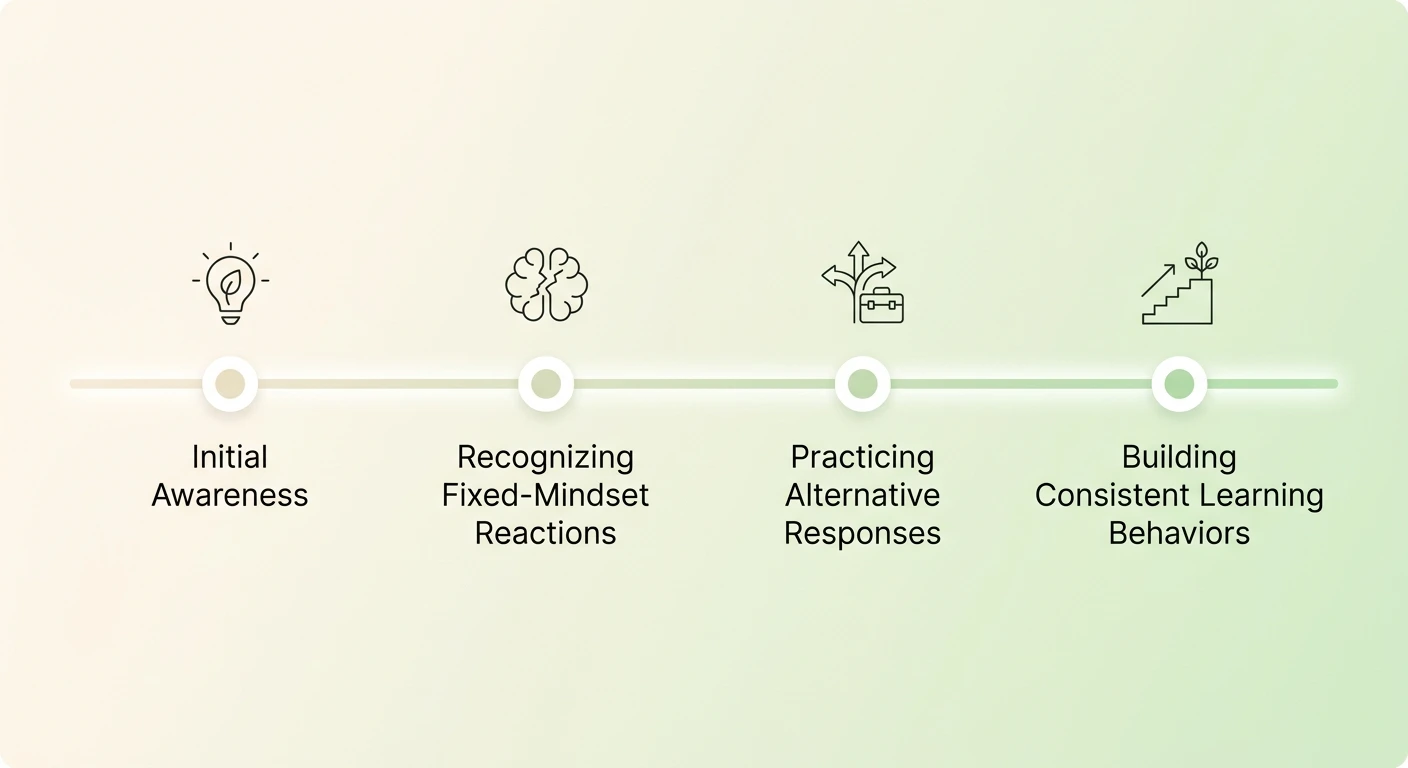
There is no fixed number of days or weeks required to develop a growth mindset. Immediate changes in awareness can happen almost right after reading, but longer-term changes in behavior take sustained practice. A realistic progression typically looks like this:
- Initial awareness: Recognizing the concept and how it applies to your life.
- Recognizing fixed-mindset reactions: Noticing when you default to avoidance or self-protection.
- Practicing alternative responses: Deliberately choosing a learning-oriented reaction instead.
- Building consistent learning behaviors: Making the new response automatic over repeated situations.
Progress varies according to context, prior habits, and how consistently the ideas are practiced.
Practice Guide: Turning Growth Mindset Ideas Into a Weekly Routine
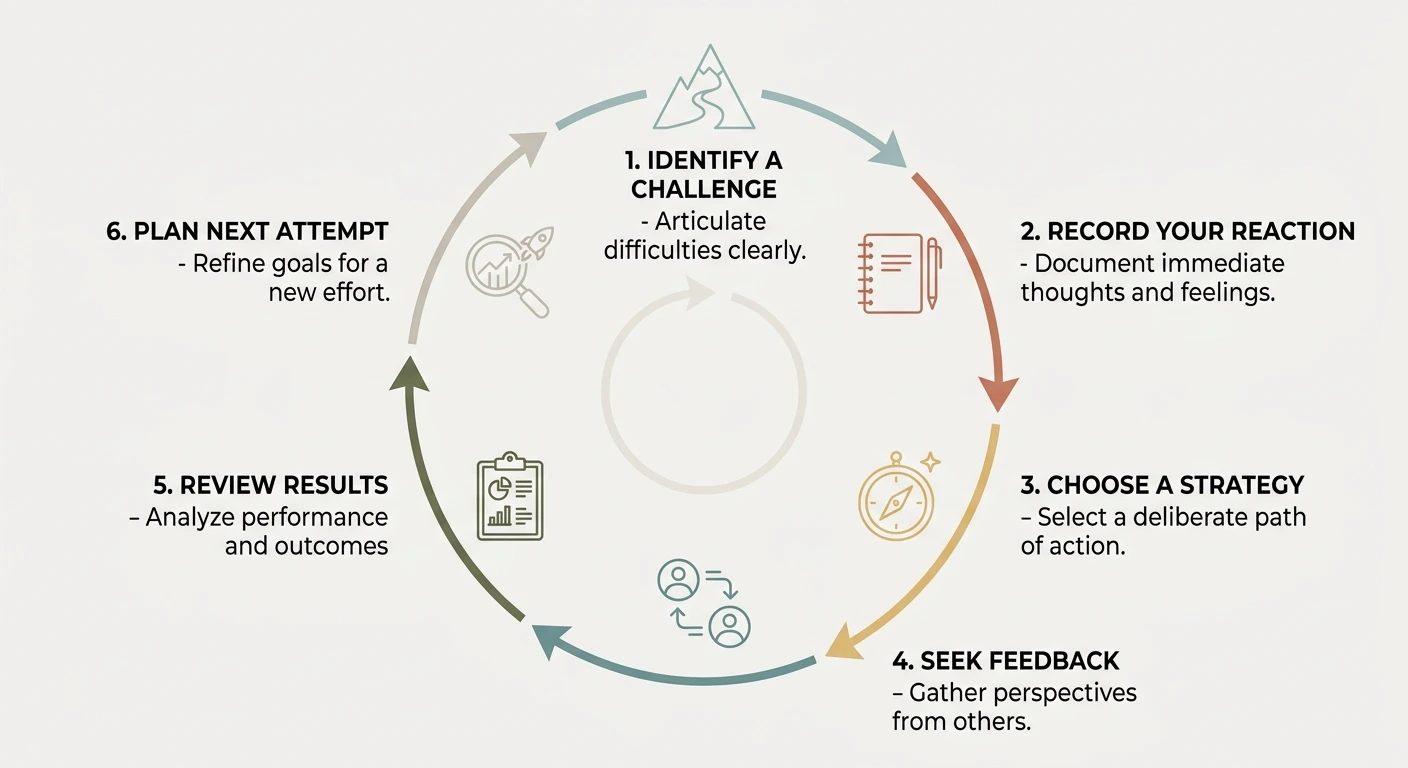
Your Daily Thrive recommends a simple weekly structure to translate reading into practice:
- Identify one challenge you’re facing this week.
- Record your initial reaction to that challenge.
- Choose a specific strategy to try.
- Seek feedback from a reliable source.
- Review what worked and what didn’t.
- Plan your next attempt based on that review.
Motivation naturally fluctuates, so building in accountability — such as a tracking journal or a check-in with another person — helps sustain the routine. As of 2026, many educators and coaches recommend combining this kind of weekly reflection with brief daily check-ins to reinforce consistency. The goal is flexible, sustainable practice rather than perfection; missing a week doesn’t undo progress as long as the routine resumes.
Comparison Block: Which Type of Growth Mindset Book Should You Choose?
| If you want to… | Look for a book that emphasizes… |
|---|---|
| Learn the fundamentals | Psychology and core growth mindset concepts |
| Improve academic learning | Students, learning strategies, and feedback |
| Help a child | Stories, examples, and age-appropriate activities |
| Improve professional performance | Learning, feedback, adaptation, and workplace application |
| Build resilience | Setbacks, persistence, and adaptive responses |
| Develop better habits | Repeated practice and behavior change |
| Understand the research | Evidence, studies, and theoretical foundations |
Conclusion
A growth mindset is the belief that abilities can develop through learning, effort, effective strategies, and feedback — and the best books about growth mindset reflect that idea differently depending on the reader’s age, goals, and desired depth. Adults, students, children, and educators each benefit from books tailored to their specific context, whether that means foundational theory, academic application, or age-appropriate storytelling. Reading is most valuable when its concepts are translated into practical behavior: choosing a credible, audience-appropriate book is only the first step. The real value comes from using its ideas to respond differently to challenges, feedback, mistakes, and learning opportunities over time.
Frequently Asked Questions About Growth Mindset Books
What is the best book about growth mindset? There is no single universal answer — the best book depends on the reader’s purpose and experience level. Beginners typically benefit from an accessible introduction, while more experienced readers may prefer research-based or application-focused titles.
What books should I read to develop a growth mindset? Look for books that cover foundational theory, practical application, resilience, or age-specific guidance, depending on your current understanding and goals. A combination of a foundational text and a practice-oriented book often works well.
Are growth mindset books useful for adults? Yes. Adults can apply growth mindset principles to careers, learning new skills, relationships, and ongoing personal development, particularly when the book connects theory to real-world situations.
Which growth mindset books are best for students? Books that address academic challenges, study strategies, interpreting feedback, and persisting through difficult subjects tend to be most useful for students.
What are good growth mindset books for children? Look for age-appropriate storytelling, accessible vocabulary, a developmentally suitable structure, and practical activities that translate abstract mindset concepts into concrete situations.
Can reading a growth mindset book actually change your mindset? Reading builds awareness, but changing behavior requires repeated application, reflection, feedback, and practice over time — not just finishing the book.
Is growth mindset the same as positive thinking? No. Growth mindset centers on the belief that abilities can improve through learning and strategy changes, while positive thinking centers on maintaining an optimistic outlook regardless of strategy.
How can I maintain a growth mindset when I keep failing? Focus on strategy changes, constructive feedback, realistic process-based goals, and consistent reflection rather than treating repeated setbacks as evidence that improvement isn’t possible.